Overview
Ngorongoro Crater
Breathtaking and biodiverse, the Ngorongoro Crater — the world’s largest intact volcanic caldera — offers exceptional year‑round game viewing. Its protected grasslands, forests, and soda lake sustain dense populations of lions, elephants, buffalo, hippos, and the rare black rhino.
Key Highlights
Empakaai Crater
A lesser-known but equally spectacular destination, Empakaai Crater features a deep lake that occupies nearly half its floor. The trek down to the lake is a favorite among hikers and offers breathtaking views of the surrounding highlands and distant Mount Kilimanjaro.
Olduvai Gorge
Often referred to as the "Cradle of Mankind," Olduvai Gorge is one of the most important paleoanthropological sites in the world. It has yielded numerous fossils and artifacts that provide significant insights into early human evolution.
Lerai Forest
This lush, groundwater forest on the Crater floor is home to a variety of bird species and provides a tranquil habitat for elephants and other wildlife. The dense vegetation and towering trees create a serene environment that contrasts beautifully with the surrounding plains.
About Ngorongoro Crater
Formed millions of years ago, the Ngorongoro Crater is part of the Ngorongoro Conservation Area, a UNESCO World Heritage site that protects a unique mosaic of wildlife and pastoralist cultures.
The Maasai continue to inhabit the surrounding highlands, coexisting with wildlife under a multiple‑land‑use model. Today, the Crater is celebrated as one of Africa’s most dramatic safari destinations.
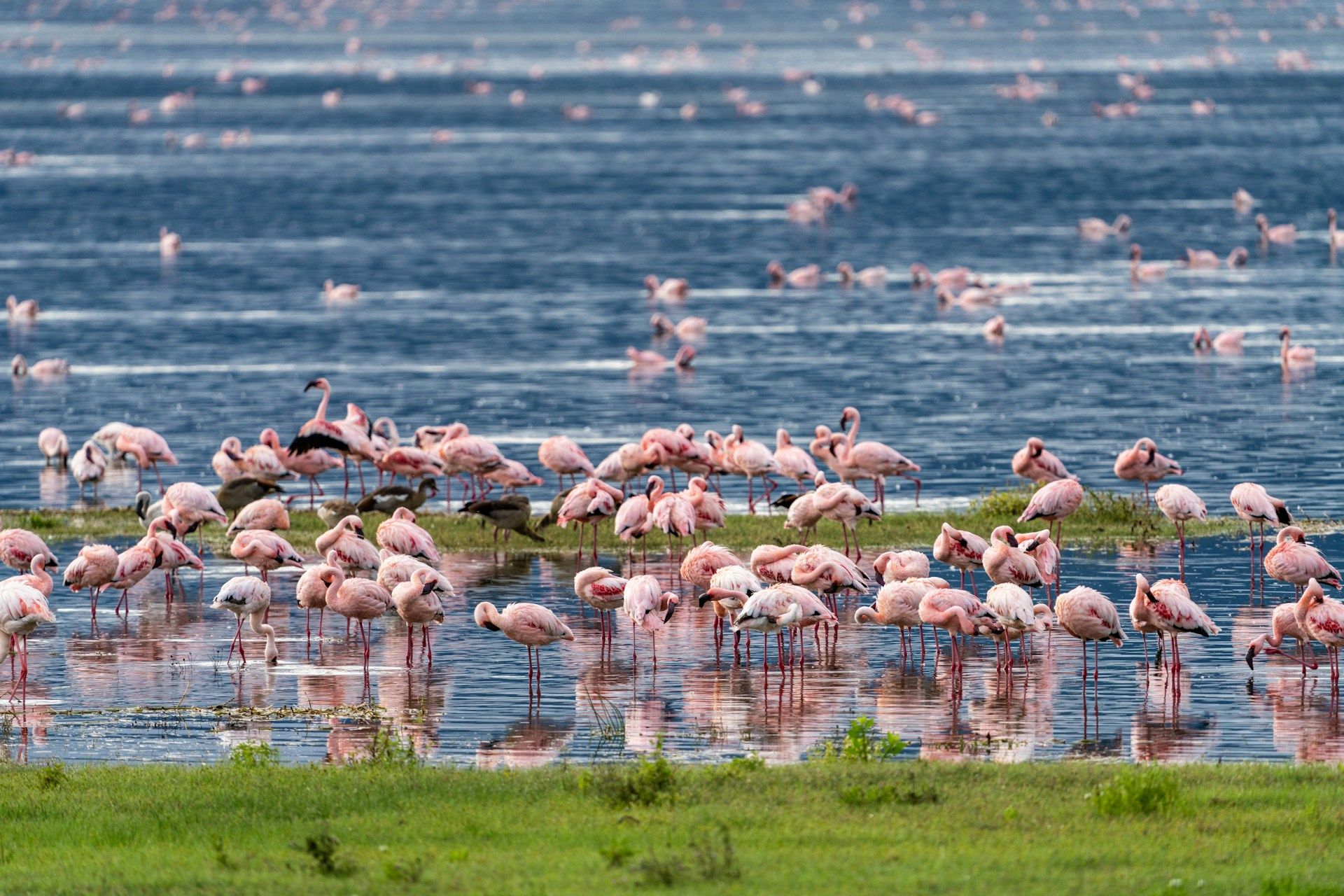
The crater's floor is a unique ecosystem, supporting a wide range of species in a relatively small area. Visitors can expect to see large herds of wildebeest and zebras, as well as hippos, hyenas, and a variety of bird species.
When to Visit
Climate
The Ngorongoro Crater has a temperate, cool climate with minimal seasonal temperature variation due to its high altitude (over 2,000m) and tropical location. Days are mild (roughly 19°C–25°C) and nights are chilly (dropping below 10°C), with the rim colder than the floor. It is a year-round destination, with the dry season (June–October) best for wildlife viewing and the wet season (November–May) best for green scenery and birdwatching.
The best time to visit the Ngorongoro Crater is during the dry season, from June to October. During these months, the weather is more predictable, and wildlife is easier to spot as animals congregate around the water sources within the crater. The clear skies also offer better visibility for stunning photography.
The wet season, from November to May, brings lush, green landscapes and fewer tourists. While wildlife is still abundant, the dense vegetation can make animals harder to see. However, this period is excellent for bird watching and enjoying the beautiful scenery with fewer crowds.
Peak Season
From June to October.
Wet Season
From November to May,
Activities & Experiences