Overview
Ruaha National Park
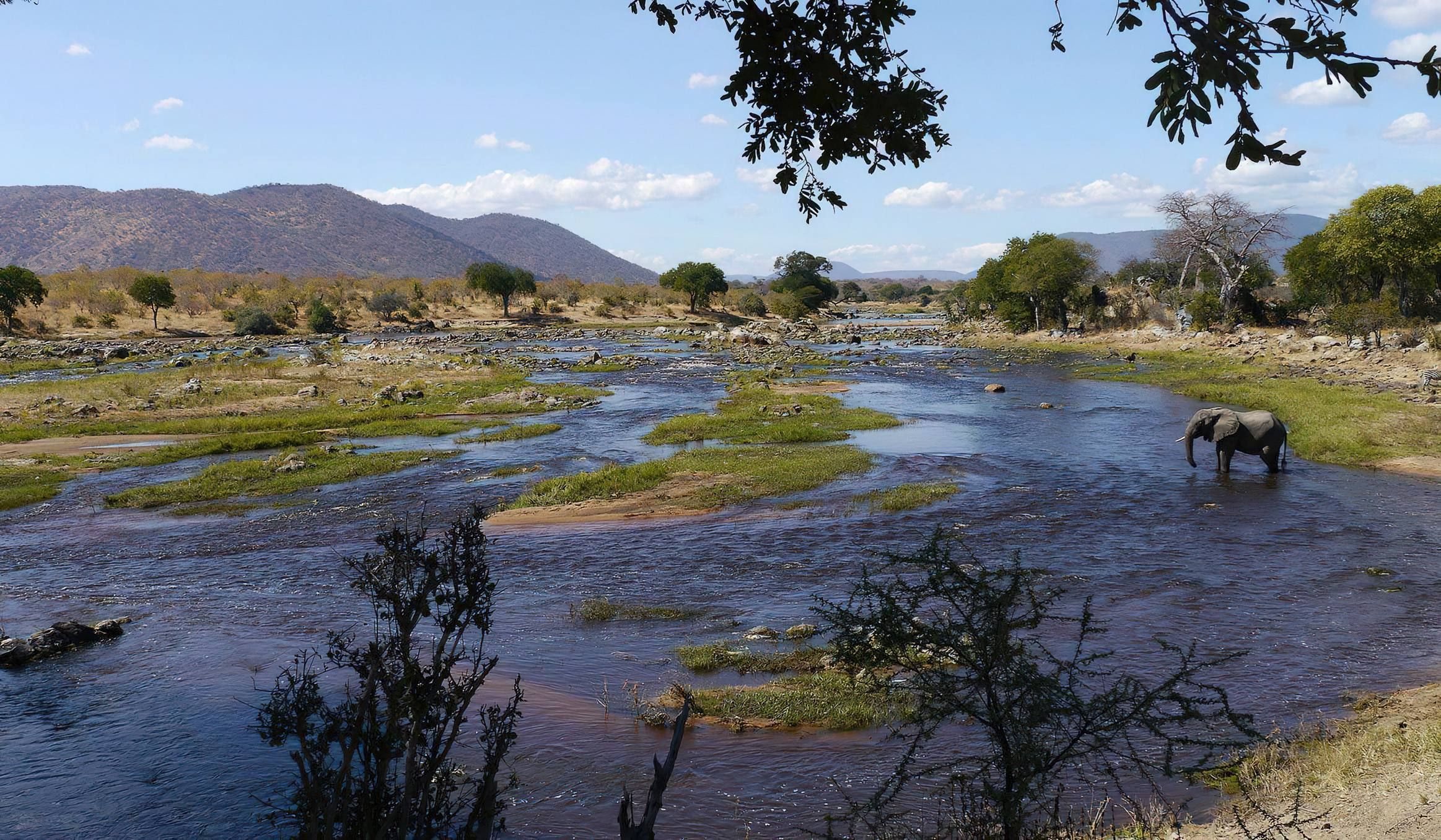
Ruaha National Park is one of Tanzania's largest and least visited parks, offering a true wilderness experience. The park is known for its stunning landscapes, including the Great Ruaha River, which attracts a variety of wildlife.
About Ruaha National Park
Ruaha National Park is a national park in Tanzania . In 2008, the Usangu Game Reserve and other important wetlands were added to the park, increasing its size to about 20,226 km2 (7,809 sq mi). The park is about 130 km (81 mi) west of Iringa . The park is a part of the 45,000 km2 (17,000 sq mi) Rungwa-Kizigo-Muhesi ecosystem , [2] which includes the Rungwa Game Reserve , the Kizigo and Muhesi Game Reserves, and the Mbomipa Wildlife Management Area. [3]
The park's name is derived from the Great Ruaha River , which flows along its southeastern margin and is the focus of game-viewing. The park can be reached by car on a dirt road from Iringa, and there are two Airstrips – Msembe Airstrip at Msembe (park headquarters) and Jongomeru Airstrip, near the Jongomeru Ranger Post. [2]
History
Germany gazetted the Saba Game Reserve in 1910. British colonial authorities changed the name to the Rungwa Game Reserve in 1946. [2] In 1964, the southern portion of the reserve was excised and elevated to full park status.
When to Visit
Climate
During the dry season from May to October, the park experiences hot and dry weather with little to no rainfall. Temperatures can reach 35 °C (95 °F) during the day. Night temperatures drop to around 20 °C (68 °F). The vegetation in the park becomes dry, and rivers and water sources dwindle.
The best time to visit Ruaha National Park is during the dry season, from June to October. During this period, the weather is dry, and wildlife is concentrated around the Great Ruaha River and other water sources, making it easier to spot animals. The clear skies and pleasant temperatures also enhance the overall safari experience.
The wet season, from November to May, brings lush green landscapes and a variety of bird species, including many migratory birds. While the scenery is stunning, wildlife viewing can be more challenging due to the dense vegetation and dispersed animals. However, this period offers a more tranquil and uncrowded experience.
Peak Season
June to October.
Wet Season
November to May,
Activities & Experiences