Habitat
grassland
Weight
800 to 1400 kg
Population
263
Diet
herbivore
Lifespan
30 to 40 years
Scientific Name
Diceros Bicornis
IUCN Status
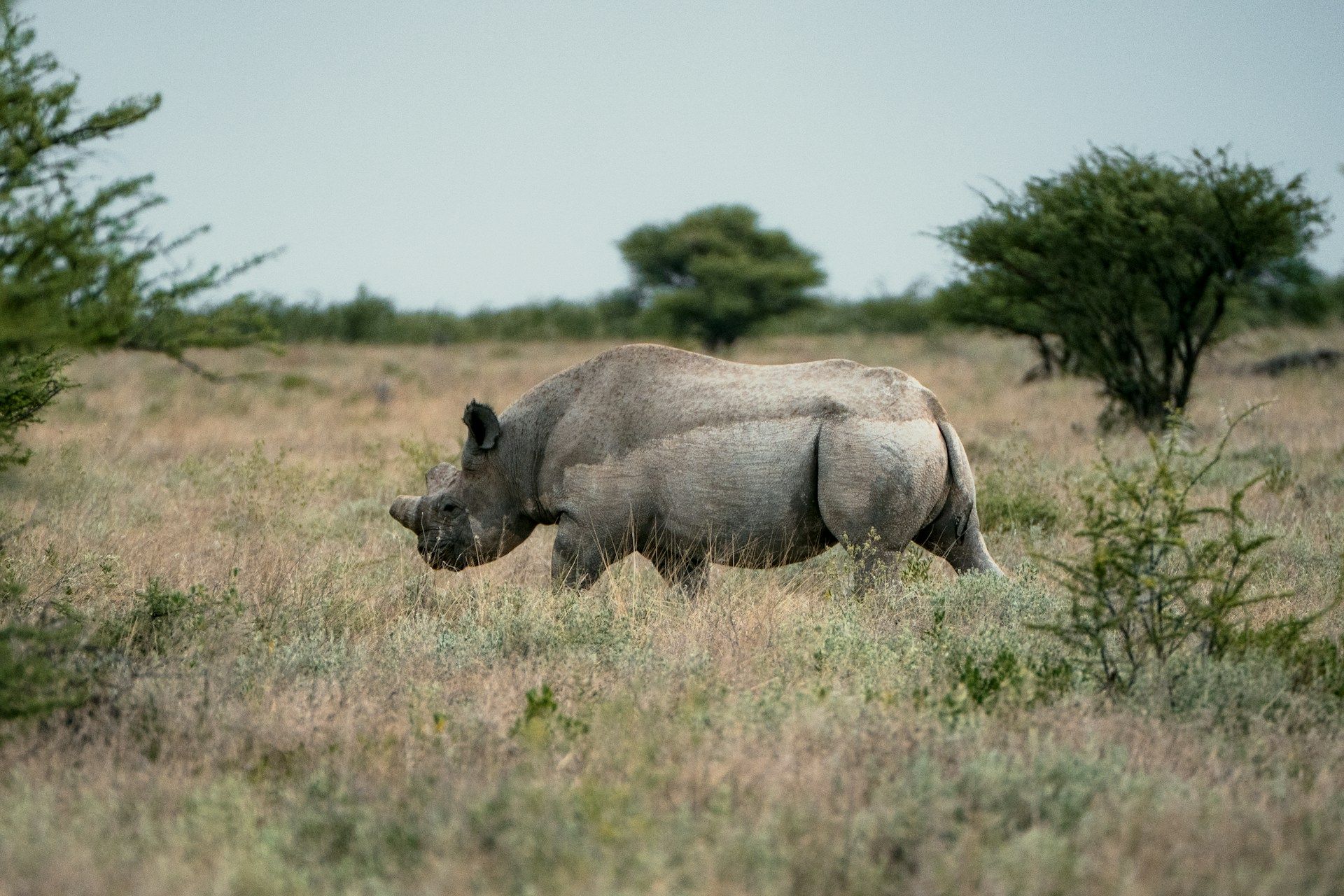
CR · Critically EndangeredTanzania’s black rhinos belong to the eastern subspecies (Diceros bicornis michaeli). They were once numerous across the country, but numbers plummeted during the poaching onslaught of the 1970s and ‘80s. Intensive protection has since brought a slow recovery – boosted by a reintroduction programme that over the last two decades has seen black rhinos relocated to Tanzania from South Africa, the UK and the Czech Republic.
Today numbers are slowly increasing, with a 2023 census (International Rhino Foundation) putting the overall number at 212. This population is divided largely between the Ngorongoro Conservation Area (including Serengeti National Park) in the north, Mkomazi National Park in the northeast and Nyerere National Park in the south.
Tanzania: black rhino hot spots
Ngorongoro Crater might well be the easiest place in Africa to see black rhinos. Here, the small and heavily guarded population is especially conspicuous on the short grass plains, a cluster of other safari vehicles generally betraying a sighting. Further west, in Serengeti National Park, sightings are becoming more frequent – especially in the central Mori Kopjes region, as well as in the Grumeti Game Reserve to the northwest and in the Mara river area, where they sometimes cross from Kenya’s Masai Mara.
The small population in the vast Nyerere National Park , further south, are seldom seen by visitors. However, those in Mkomazi National Park, in the northeast, can be viewed inside a special protection zone. As populations increase, wildlife authorities are increasingly moving animals between locations to guard against inbreeding.