
Habitat
grassland
Weight
50 to 72 kg
Population
1,000 to 1,500
Diet
carnivore
Lifespan
10 - 12 years
Scientific Name
Acinonyx Jubatus
IUCN Status
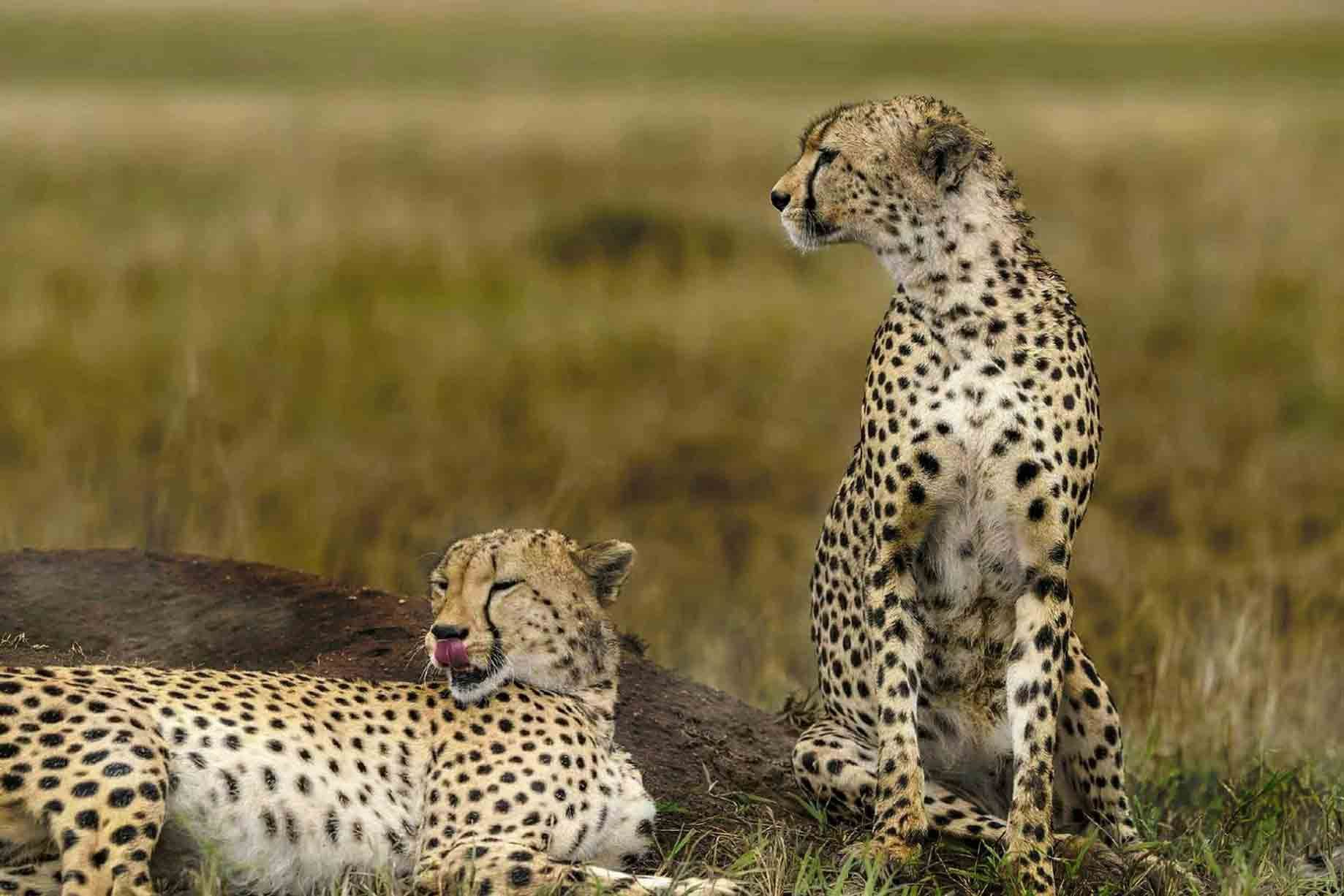
VU · VulnerableThe cheetah is a marvel of evolution, designed for speed. Capable of reaching speeds up to 60-70 mph in short bursts covering distances up to 500 meters, they are unrivaled in the animal kingdom for their speed. Cheetahs have distinctive black tear stripes that run from the eyes to the mouth, which help reflect the sun's glare and focus better attention on prey.
Unlike other big cats, cheetahs rely on sight rather than smell to hunt, primarily targeting medium-sized ungulates. They are diurnal, mainly hunting during the early morning and late afternoon.
Top tips for viewing cheetahs
Cheetahs prefer open savannah habitats, where they can more easily spot and pursue their prey. They are thus most easily seen in regions that offer this terrain, including the Serengeti /Maasai Mara (Tanzania/Kenya) the central and southern Kalahari (Botswana/South Africa) and Etosha (Namibia). Good populations also occur in the Okavango (Botswana), Kruger Park (South Africa) and Kafue (Zambia).
Nonetheless, cheetahs are rare, having lost more than 90 per cent of their historic range across Africa. Look for them by day, scanning the grasslands and watching for prey animals on the alert. Check termite mounds, too: cheetahs have a convenient habit of perching on top. Sightings are typically of a female with cubs or a group of young males, known as a coalition.